Affichage des articles dont le libellé est Thirty years war. Afficher tous les articles

vendredi 21 octobre 2016

Spanish line regiments, 1643

The Spanish army at Rocroi contained a large number of infantry regiments, the famous Tercios, of which Rocroi was, for the most part, the tomb.

  • 5 Spanish tercios viejos
  • 3 Italian tercios
  • 5 Wallons regiments
  • 5 German regiments
  • 2 Burgundian regiments
The army in DBA format 1500-1900 has 5 pikes and 4 musketeers.
 
Photo: reenctmant group "La Courbière"

 At the present time, I have painted only one bunch of Spanish infantrymen:
Tercio of Saint-Amour (Burgundian)


jeudi 20 octobre 2016

French line regiments, 1643

My armies XVIIth century French and Spanish are of DBA format and not BBDBA. They therefore comprise only twelve plates each in total.

"Régiment de Picardie"

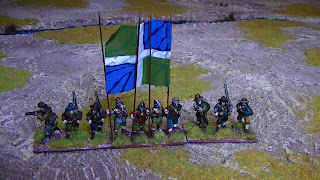
As a result, the French army that I line up has only 3 pincers. So I chose three regiments. The choice was made for the regiments of Picardy, Piedmont, and the Navy. I wanted to align the regiment of Picardy and the choice of the other two imposed itself on reading the stories of the battle. These regiments were in the same battle area (even if the extract below does not relate their best feat of arms)

"Régiment de Picardie"

 
« Picardie to the "right of everything"; He is the dean of the French infantry. In the recriminations exchanged at the battle of Thionville, the conduct of this regiment had been severely condemned; He will recover brilliantly on May 19th. The mestre de camp, de Nangis, and Maupertuis, lieutenant-colonel, were present. Picardie is supported by "La Marine", created in 1636 and already ranked among "the old". (...) a new combat begins with the same issue as the first. In the midst of the smoke and dust, several enemy cortices pass without meeting our cavaliers, and arrive as far as Picardy, which, the wood cleared of the musketeers, was isolated in front of our line of battle. The wrapped regiment is formed in octagon and shows great firmness. »
Histoire des Princes de Condé par le duc d’Aumale.

Régiment de Piémont


« Those who were at the battle of Rocroi, won by the Duke d'Enghien in the year 1643, were able to see the great efforts and service rendered by the regiment of Picardy in octagon form by the Sieur de Pedamons, One of his captains, who on this day signalized himself to the conduct of the Lost Children of that body.»
Colbert de Lostelneau, Le Maréchal de bataille.
Régiment La Marine


 « But as I was leaving to go, the Chevalier de La Valliere, marshal of battle, arrived, who brought an order to the troops which I had rallied from the wing commanded by the Marquis de la Ferte-Senneterre, and told them that the Battle was lost. These troops were the regiment of Picardy, that of Piedmont, that of the Navy, the Swiss of Molondin, and the regiment of Persian. These troops, who had been very ill-treated, readily obeyed the command given them by this marshal of battle. But seeing that they were abandoning me, I went to them; I asked them to stand firm»
Mémoires du Baron de Sirot

(The above excerpts are taken from the blog De Rohan à Turenne)


The regiments of Picardy, Piedmont, and the Navy are among the "old" ones, such as the old regiments which were not dissolved at the end of the campaigns.


The infantry in the service of France at the beginning of the year 1643

(Information from the site De Rohan à Turenne, a remarkable site devoted to this period)
- Regiments with 30 compagnies : Gardes françaises, Picardie, Piémont, Champagne, Navarre, Normandie, la Marine, Rambures, Vaubecourt, Lyonnais, Turenne, la Meilleraye, Langeron, Douglas-écossais, Roussillon, Enghien, Conti, Persan. 
- Regiments with 20 compagnies : Gardes suisses, Auvergne, Nerestang, Sault, Poudens-St-Vallier, Lorraine, Plessis-Praslin, Bourdonné, Montausier, Castelmoron, Touraine, Vaillac, La Tour, Aiguebonne, Provence, Annevoux, Nettancourt, Espagny, Grancey, Effiat, Navailles, Tonneins, Vidame d’Amiens, Bussy-Lameth, Vervins, Houdancourt, Florinville, Grandpré, Roquelaure, Lamothe-Houdancourt, Guiche-étranger (Belgian), Lambertie, La Chabrouillaye, maréchal de Brézé, Rébé, Vandy, Huxelles, Roqueservières (German), Batilly, Quincé, Biscaras, Castelnau-Mauvissière, Roqueservières français, Bellefonds, Aubeterre, Montpezat, Bourgogne, Périgord, Clauleu, Bretagne, la Suze, Beauce, Bonne, Noailles, Roucherolles, Boissy, Melun, Marquis de Brézé, les Galères, les ïles, le Havre-de-Grâce, Béarn, Languedoc, Poitou, Saintonge, du Tot, Nangis, Espenan, Rasilly, d’Estrées, Villequier, du Passage, Ventadour, Courcelles, Mirepoix, d’Harcourt-Artois, Castrevieille, Castelan, Sauveboeuf, Clermont-Vertillac, la Couronne, Montpeyroux, Kaergroet, Kolhas (German), Gesvres, Tavannes, Dauphiné, la Douze, Guebriant, Grignols, Souvigny, Averne, Wall (Irish), la Feuillade, Oysonville, Estrades, Lesdiguières, Gonnor, Gaderousse, Lannoy, Matha, Sivron, la Mézanzère, Grammont, Fronzac, Laval, comte d’Alais, l’Eglise, Palliers, la Prée, Auduze. 
- Regiment with 18 compagnies : Mignières. 
Regiment with 15 compagnies : les Vaisseaux, Schombeck (German). 
Regiment with 12 compagnies : Gardes-écossaises, Saint-Etienne, Brasseux, Boisse, La Jonchère-la Ferté, Axtein (German), Lignières, Praromann (Swiss), Roll (Swiss), Bridieu. 
Regiment with 10 compagnies : Mondejeu, Saint-Paul, Bellebrune, Molondin (Swiss), Coosle (Irish), du Buisson, Zillard (German), Feuquières, Rasilly (German), Notaf (German), Ehm (German), Fitz-Williams (Irish), Belings (Irish), Lenty (Scottish), Watteville (Swiss), Metz, Maleyssis, Lermont, Montécler, Am Büchel (Swiss), Mazarin-italien, Foulartou (Scottish). 
- Régiment à 9 compagnies : Rhoon (Swiss).


jeudi 29 septembre 2016

My " armée de Picardie" (french army at Rocroi)


This page will present the photos of my French army for this battle of May 1643. No pictures of figurines for now (it is under construction, as well as its counterpart and French opponent).
You will find on this page the composition of the army and historical data.

A radio program evoking Condé's victory at Rocroi.

 
........................

Composition (rule DBA, according to extension 1500-1900)

1 x 3Cv  Cavalru, unde rthe duke of Enghein, future "grand Condé" (General)
2 x 4Pi    Pistoliers
1 x 4Kn  Cuirassiers, under Gassion
3 x 4Pk   Pikemen
4 x 4Sh   Handguners
1 x Art    Artillery

Figures picturess

- The infantry (Lien vers la page consacrée)


Regiment of Navarre Louis XIII

  The review of 18 May and the night of 18 to 19 May 1643.

In order to present this army, I rely on the quotation from Henri d'Orleans:"Louis de Bourbon was of moderate stature, slender, well proportioned, of delicate appearance, but muscular and broken in the exercises of the body, in the use of arms and the horse. The nascent mustache barely covered a rather thick lip; The mouth was large, the chin fleeing, the cheekbones protruding; The very arched profile exaggerated what is commonly called the Bourbon type; He had a superb forehead, his eyes dark blue, a little on the level of his head, but very beautiful, his penetrating gaze, and in his whole person a strange charm which captured and subdued. Let us follow him in this moving review, passed in the presence of the enemy's army in battle, on the eve of a day which may decide the fate of France.(...)


(...)La Motte Saint-Cyr presents to him the ancient dragoons of Richelieu, whom their new armaments has made known as fusiliers; It is the light troop par excellence; It flanks the extremity of our line; It lacks the hundred and twenty men whom Gassion has thrown into Rocroy. In this left-wing cavalry, which is finishing in order, the Marquis de Beauvau's Liégeois are shown beside the French squadrons of Guiche, La Ferte, Harcourt, others less known, and the Marolles regiment, one of the And already one of the best. Marolles, said the Brave, condemned to death after a famous duel, has just passed into exile ten years employed in serving France outside France; He is much appreciated by the Due d'Anguien, who sends him a friendly greeting and who also salutes for the last time the brilliant Earl of Ayen. Henri de Noailles was killed the next day at the head of the Guiche light-horses.(...)


(...)Behold, on the left of the infantry, the sombre flag of the "black bands," a remembrance of John de Medici and the wars of Italy. He floats in the first rank of "Piedmont," the most popular, the best trained of our regiments. No body practices both the tactics of the extended order and the musketeers deployed. The Spaniards nicknamed him El Bizarro, the valiant among the valiant, and they know him well; Because it was he who stopped their rise at Corbie in 1636; They have found it elsewhere; If he had been supported when he attacked the wood of La Marfee in 1641, or when the following year he defended the abbey of Honnecourt, the fate of these two days might have been different. Like the other French or Swiss old regiments, Piedmont has several companies detached in garrison, and superior officers employed as governors of places. The chief of corps, Gaspard de Coligny, whose name will often be involved in the life of our hero, is not present; The lieutenant-colonel, Puységur, who had been taken prisoner the year before, was still with the enemy; They are replaced by the first captain. All the infantry officers are in the rank; The mestres de camp and sergeant-majors are alone outside, on the side of their troops, on foot and spades in their hands.(...)


(...)Near Piedmont, the first of the "petits vieux," Rambure, whose name since Ivry is synonymous with bravery. These two regiments are almost always together. Rene de Rambure, the fourth mestre of this name, has just replaced his brother, killed at Honnecourt. The Duc d'Anguien then passes before the front of some less famous regiments, among whom we note that of the Count de Bussy-Rabutin, who does not serve during this campaign. In the center, in the place fixed by the ordinances, he finds the Scots and the Swiss; Among strangers, it is those whom the oldest brotherhood of arms unites to the French troops; The king has granted, or rather preserved to the former, the rank of the guards Molondin of Solothurn, is remarked by the fine appearance of his two battalions; The mestre de camp is an eminent maneuver. Then the Duke goes to see the troops of the third line, especially the gendarmes, who are the bottom and nerve of this reserve, handsome horses, brave horsemen, many of whom are his friends. Montcha, the handlebar of the queen's gendarmes, has the command of the six companies which form two squadrons....)


Cuirassiers de Gassion

(...)Having conversed with Sirot for a few moments on the part assigned to the reserve the next day, M. le Duc returned to the first line. La Fressinette, lieutenant-colonel, presents the regiment of Persan; The prince learned with sorrow that he had just been carried away by the mestre de camp, his friend, and one of the best infantry officers of the army, seriously wounded by a cannon-shot. "Picardie" has the "right of everything," it is the dean of the French infantry. In the recriminations which gave rise to the battle of Thionville, the conduct of this regiment had been severely condemned; He will recover brilliantly on May 19th. The mestre de camp, of Nangis, killed in 1644, and Maupertuis, lieutenant-colonel, killed a few months later, are present. "Picardy" is supported by "La Marine," created in 1636 and already ranked among "the old. It was the favorite body of Cardinal de Richelieu, who gave the command to a tried chief, the Marquis de la Trousse, the father of Mme de Sevigne's friend."
 (Source: Henri d'Orléans, La Première campagne de Condé, Revue des deux mondes, 3e période, tome 56, 1883 (pp. 721-750).
 

Jean de Gassion
Jean de Gassion is a highly experienced general. He served under the orders of the King of Sweden and is characterized by a temperament of sabreur whose dynamism does wonder at the head of the cavalry. He takes an important part) at the Battle of Rocroi. His military qualities are the only competitor of his great reputation in the field of love. The words of the court ladies at his place are very clear ("He was one of the most wicked courtiers of his age." At court many girls who had been pleased with him cajoled him and said to him: Monsieur, you have done me the finest things in the world. "" I have more joy than you have kissed me than if I have been given a hundred-thousand pounds».
Stéphanie Félicité comtesse de Genlis, Les annales de la vertu, ou, Histoire universelle, iconographique et littéraire: à l'usage des artistes et des jeunes littérateurs, et pour servir à l'éducation de la jeunesse,, vol. 2, maradam,

 Gassion's cuirassiers

Spaniards, Battle of Rocroi 1643

This page will present the photos of my Spanish army for this battle of May 1643. No pictures of figurines for now (it is under construction, as well as its counterpart and French opponent).

You will find on this page the composition of the army and historical data.


Composition (règle DBA, selon l'extension 1500-1900)

1 x 4Pi   Cavalry d'Alsace, under Don Francisco de Melo (General)
1 x 3Dr   Cavalry d'Alsace, under Issembourg
1 x 4Pi   Cavalry des Flandres, under Albuquerque
4 x 4Pk  Pikemen of the Tercios 
4 x 4Sh  Hharquebusiers of the Tercios
1 x Art   Artullery

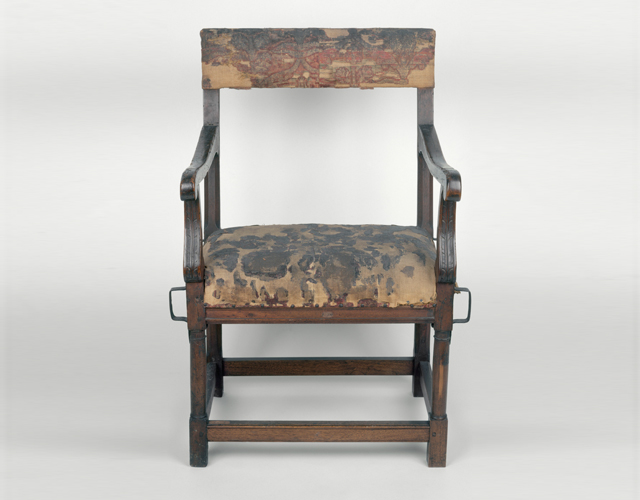
The Comte de Fontaine is represented as an item of luggage, although historically it was present in the heart of the tercios. This allows me to "hold" the chair on a pedestal and will often imply that the eventual death of the count would often coincide with the end of the battle.


Figurines

- Infantry

Historical notes


Don Francisco de Melo


France was in a critical situation in 1643. King Louis XIII is dying (he will die before Rocroi and his death will be hidden until after the battle).

The Spaniards wish to profit by this weakening of the enemy kingdom.

They believed that the shortest way to repair their losses was to become masters of Rocroi, one of our last places on the frontier, and whose grip would open the way to the capital and heart of France. They hoped to be supported by the malcontents, who should not fail to rise in the interior of the country.

To carry out their project, they assembled near Douai all the troops of Flanders, who were the most seasoned of Europe, and a formidable artillery. Dom Francisco de Melo, an experienced old general, the victor of Marshal de Guiche, at Honnecourt, on the 26th of May of the preceding year, ordered his army to march to Champagne, the places of which were without provisions and defenses, and to invest Rocroi on the 13th May 1643, by the corps of troops commanded by the Count d'Issembourg. Two days later he went himself to this place with his whole army.
.

Flag taken from the Spaniards in Rocroi - Chantilly museum


He hoped that the siege would not be long, and that the city, not being well fortified, would not dare to defend itself against a numerous and victorious army. His intention was to make of this place the key of the campaign, a place of arms and the center of its military operations. He therefore caused the trench to be opened without circumvallation, so much did he flatter himself that he would prevail before the arrival of any assistance. But God did not allow, said Marlot, that the inheritance of the great Saint Remy was defiled by a defeat. Melos having carried off the night of May 16th-17th, in spite of the vigorous resistance of the garrison, the half-moon of the Moulin-a-Vent and that of the Porte-Maubert, he thought himself already master of the fortress. Paris trembled, and the ministry was not without serious anxiety.

Persuaded that Melo had prepared for them a brilliant triumph, the Spaniards awaited with the same impatience as the French, the signal of the combat. But they did not know with all Europe that this young general, who was accused of inexperience and temerity, had the soul, genius, and fortune of Alexander! That it was to him that the supreme arbiter of the combats had reserved the glory of bearing the most mortal blows to a monarchy which had so long threatened to engulf all the others.

Then Melo arranged his army in battle on an eminence opposite the French, and in nearly the same order and with the same intelligence as his adversary had done. He gave to the Duke of Albuquerque, master of the camp, general of the cavalry, the command of the left, reserving to himself that of the right.
(Référence: blog aufildesmotsetdelhistoire)


During this battle, the Comte de Fontaine (a Picard, named de Fuentes in Spanish), aged, is suffering from a gout attack, a disease that prevents him from mounting his horse. He is obliged to give his orders from the top of his chair, carried by four servants. His heroic resistance against the repeated assaults of the French earned him the praise of his conqueror, the Duc d'Enghien: "If I had not vanquished, I would have liked to die like him! "
The Count of Fontaine at Rocroi
The chair of the Comte de Fontaine- Musée de l'Armée. 

1643 The Battle of Rocroi

This is a battle for which I have figurines to represent the two forces involved. The two armies are, for the time being not finished and the photos will therefore wait.

This page traces the history of this battle that I will be led to replay frequently as soon as the two armies are completed. It is based on data gleaned from various sites (BNF Gallica, Encyclopedia Universalis, Herodotus, Wikipedia)

This battle interests me since reading the book Rocroi 1643 by Laurent Henninger, published in June 1993 by Socomer (Collection The Great Battles of History, No. 24)

A commemoration of the 370th anniversary of the battle took place in 2013. and was also the subject of a game in inset of N ° 11 of the magazine Vae Victis in 1996.


The battle of Rocroi on Youtube:


..........................................................

The Battle of Rocroi took place May 19, 1643 during the Thirty Years War. It is the encounter between the army of Flanders, a Spanish army commanded by Francisco de Melo who besieged Rocroi, and the Army of Picardy, a French army led by Louis de Bourbon, Duke d'Enghien (the future Grand Condé)


The battle of Rocroi put an end to the reputation of invincibility of the Spanish "tercios", units composed of pikemen, arquebusiers and infantrymen armed with swords. It marks the return of France to the international scene after a century of defeats and civil or religious wars.


 Mello trained his infantry in three lines, each with three large squares. Considered formerly invincible, the Spanish infantry is too heavy in pikemen. Since the loading of the musket became faster, the French adopted a flexible device, where the musketeers are more numerous than the pikemen. In both sides the cavalry is on the wings.

Enghien, anxious to prove his worth, and anxious not to cool the ardor of the lieutenants whom he had been advised to advise (the prudent L'Hospital and the intrepid Gassion), concealed from them the death of Louis XIII. Arrives on May 17, and decides to attack on the 19th to anticipate the arrival of enemy reinforcements.

On the left wing of the French, L'Hospital was strongly attacked by Mello, who did not exploit his superiority and allowed the battle to get bogged down.


Duke of Enghien at Rocroi

A magnificent video re-enactment of a battalion of the time (it is not Rocroi but it still looks a lot):


In the center, Enghien depresses the allies of the Spaniards, then, bypassing the squares of Castilian pikemen whom the old Fuentes opposes him, breaks with his cavalry and falls on the backs of Mello.

On the right wing of France, Gassion and his light horses overflowed the Spanish left whose cavalry fled in disorder but whose infantry was bravely exterminated on the spot.

The Spanish army will never recover completely from this terrible battle which, on the other hand, inaugurates with brilliance the regency of Anne of Austria: 250 enemy flags arrive at Notre Dame. From the tactical point of view, Rocroi's victory shows that the cavalry is at that moment the decisive weapon: well used, it allows maneuvering on the wings and exploiting success. A century later, as a result of the progress of armaments, fire became the predominant factor in the struggle, as Fontenoy showed in 1745.

Two links, in french, about the Rocroi campaign:

Lien vers une page externe décrivant précisement le déroulement de la bataille.

Un autre lien, encore plus complet, présentant toute la campagne de mai 1643.